Jules Jurgensen Watch Identifier
Most people meet Jules Jurgensen the same way — a pocket watch in a drawer, a wristwatch left by a grandfather, a box from an estate sale. The name looks prestigious, the watch looks old, and suddenly you want to know: what is this thing, and is it worth anything? The answer depends almost entirely on which Jules Jurgensen you have. There are three, and they are wildly different in value.
Identify with WatchIQThree different brands, one name
The original Jurgensen watchmaking house traces back to a Copenhagen workshop founded in 1773 by Jørgen Jørgensen. His son Urban Jürgensen trained under Breguet in Paris and Arnold in London, returned to Copenhagen, and built one of Europe's most respected pre-industrial watchmaking firms. After Urban's death in 1830, his son Louis Urban continued the Copenhagen operation as Urban Jürgensen & Sønner, while another son — Jules Frederik Jürgensen — relocated to Switzerland and founded what became the "Jules Jurgensen" brand. Genuine Danish and Swiss pieces from this era are museum-grade.
The Swiss operation was sold to Ed. Heuer & Co. by 1919 and then to an American company in 1936. From 1957 onward, the "Jules Jurgensen" name was licensed to a series of U.S. distributors who branded watches made by other Swiss factories — often using ETA, Felsa, or similar ébauche movements — and sold them in the American market. These are legitimate watches but have no manufacturing connection to the original Danish workshop.
In 1974, during the quartz crisis, the trademark passed to Mort Clayman, a watch distributor whose company assembled quartz and low-end mechanical watches in the U.S. Virgin Islands using Japanese movements. This is the version most people encounter today. The three eras look superficially similar on a shelf, but a pre-1900 Danish pocket watch can auction for tens of thousands of dollars while a 1980s Clayman-era quartz piece is worth less than a meal.
Step 1: Read the dial carefully
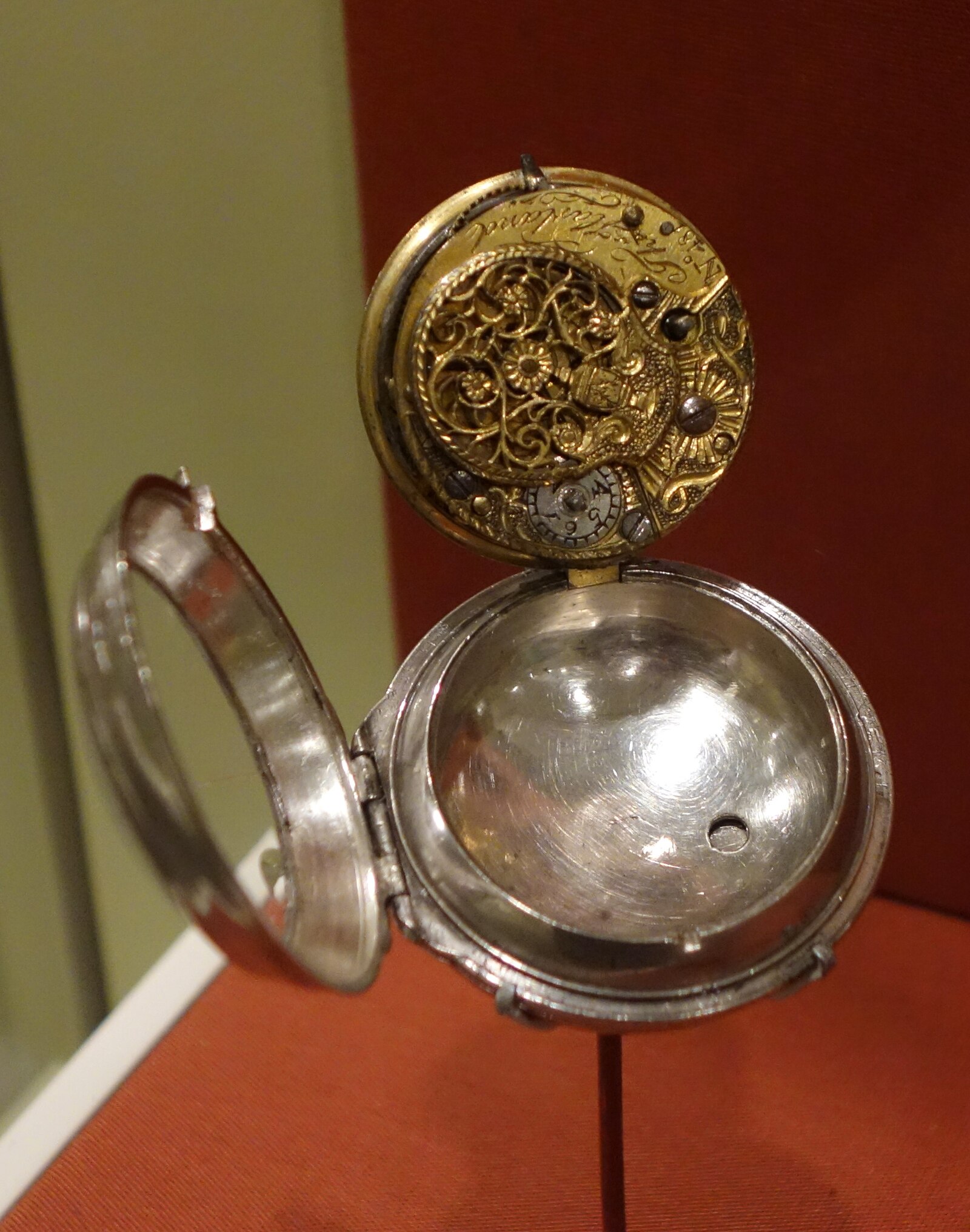
Photo: Daderot, CC0 via Wikimedia Commons. Illustrative — pocket watch from a similar era.
The dial is the single most important clue. An original Danish or early Swiss piece will typically read "Jules Jürgensen" (with the umlaut) followed by "Copenhagen" or a city name tied to the original firm. Mid-century American-era watches usually read "Jules Jurgensen" (no umlaut) and may include "Swiss" somewhere on the dial — indicating the movement is Swiss but the watch was marketed through a U.S. distributor.
Late 20th-century Clayman-era pieces often read "Jules Jurgensen USA" or include no country marking at all. If the dial includes a large gold-tone case, Roman numerals, ornate script, and "USA" — particularly if it's a quartz watch — you are almost certainly holding a 1980s or 1990s mass-market piece worth less than $100.
Step 2: Check the movement
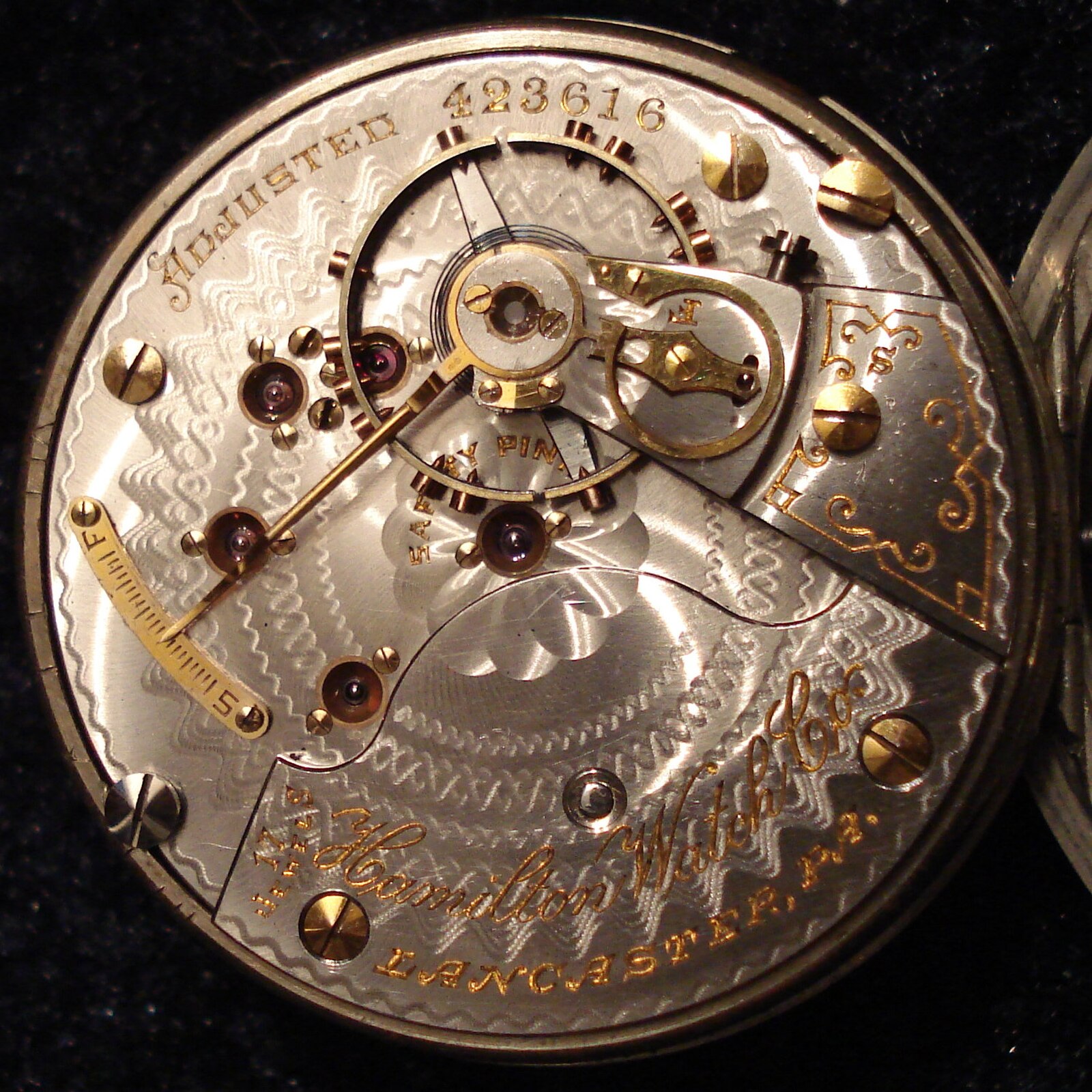
Photo: Jonathan Kotta, CC BY-SA 2.5 via Wikimedia Commons. Illustrative pocket-watch movement.
Open the caseback — or have a watchmaker do it — and look at the movement. A genuine pre-1900 Jürgensen will be a high-grade key-wound or stem-wound pocket-watch movement, often with elaborate finishing, gilded bridges, and Geneva hallmarks. The movement should be signed "Jules Jürgensen" or "Urban Jürgensen."
Mid-century American-era watches almost always contain Swiss ébauche movements (ETA, Felsa, A. Schild, Unitas) under the Jurgensen-branded rotor or bridge. Clayman-era watches from the 1970s onward frequently contain Japanese movements — Seiko, Miyota, or generic quartz modules — which is a definitive marker of the lowest-value era.
Step 3: Locate the serial numbers
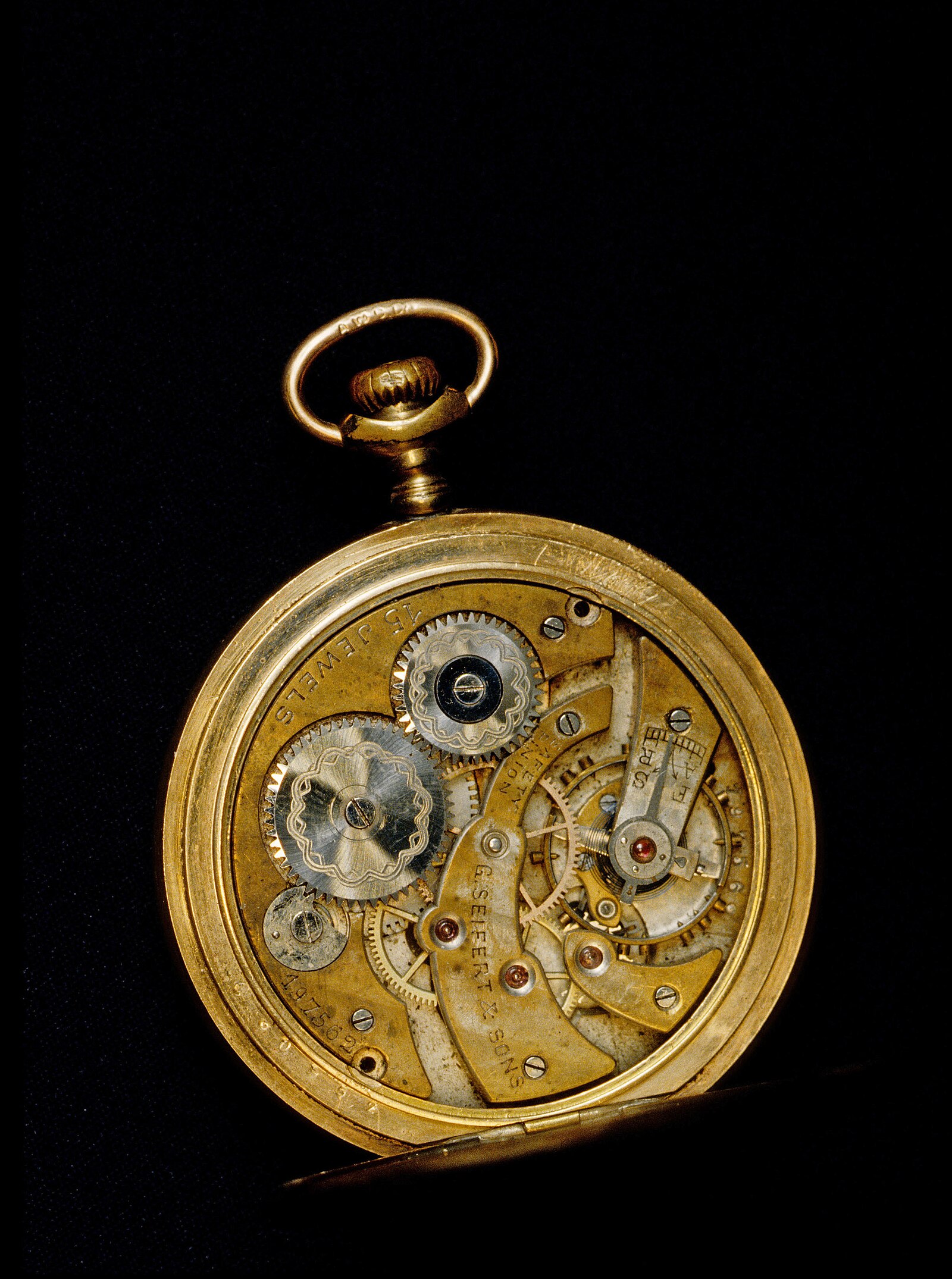
Photo: Michel Villeneuve, CC BY 2.0 via Wikimedia Commons. Illustrative — case interior from a similar era.
Jurgensen watches typically carry two serial numbers: one engraved on the caseback (the case number) and another on the movement itself. On genuine 19th-century pieces, the numbers are hand-engraved with visible variation in depth and stroke — almost calligraphic. These numbers can be cross-referenced with historical records to date the watch within a few years.
On American-era watches, serial numbers are machine-stamped and often just sequential production codes with no public registry. On Clayman-era quartz models, case numbers are often missing entirely or stamped inside lightweight plated casebacks along with "Japan Movement" or "Assembled in USVI" markings.
Step 4: Identify the era from case style and crystal
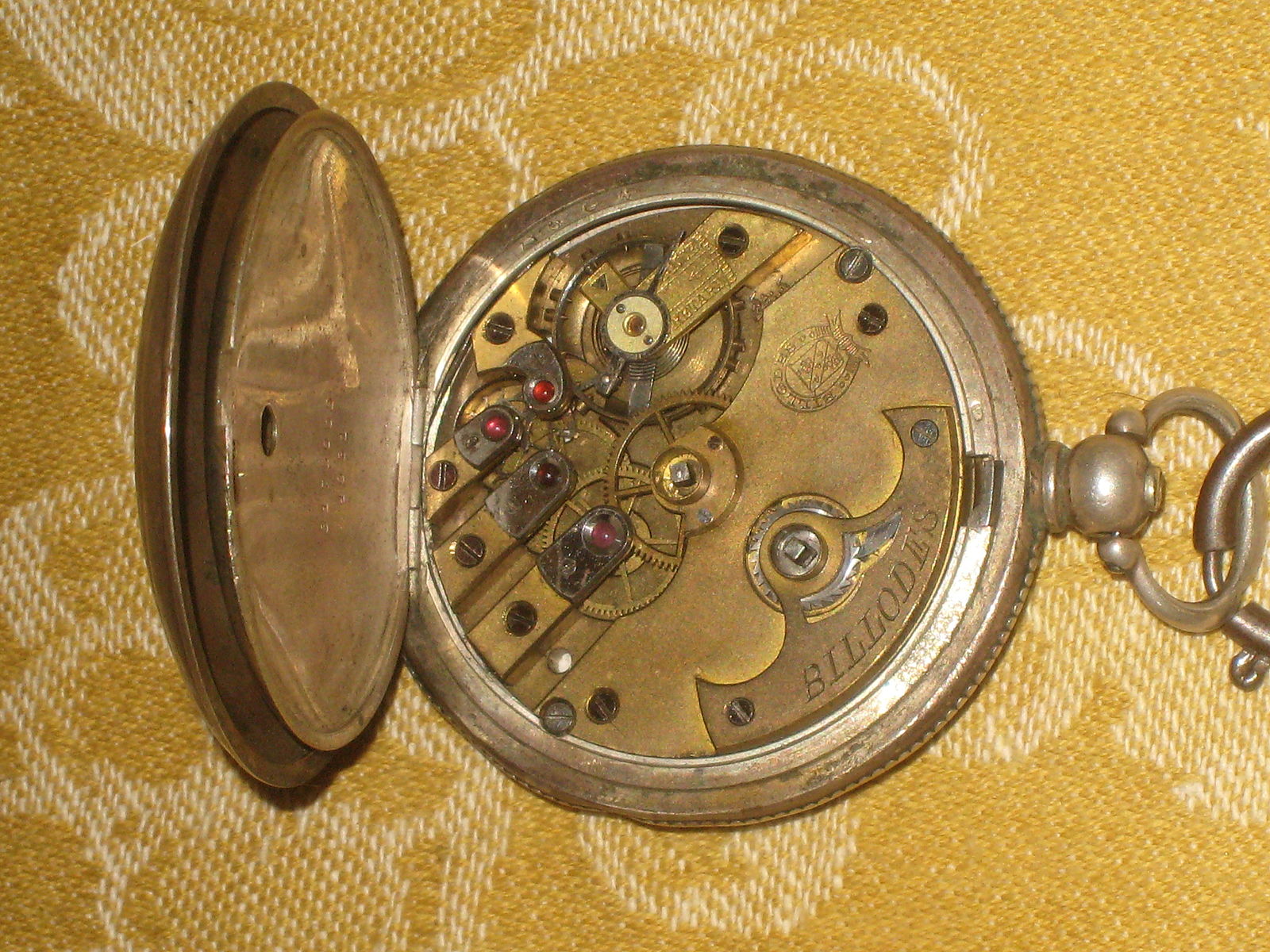
Photo: Daniel R, CC BY 2.0 via Wikimedia Commons. Illustrative 19th-century pocket watch.
Pocket watches with hunter cases (hinged covers), heavy solid-gold construction, and thick domed crystals are consistent with pre-1920 Danish or early Swiss production. Slim mid-century wristwatches with gold-filled or solid-gold cases and flat mineral crystals point to the 1940s–1960s American distributor era.
Chunky 1980s-and-later pieces with gold-plated (not gold-filled) cases, acrylic crystals with visible bevels, and display-style dials are typical of the Clayman mass-market era. If the case feels plasticky, extremely light, or shows wear through the gold plating, you are looking at a modern low-value piece.
Step 5: Look for hallmarks and case-maker marks
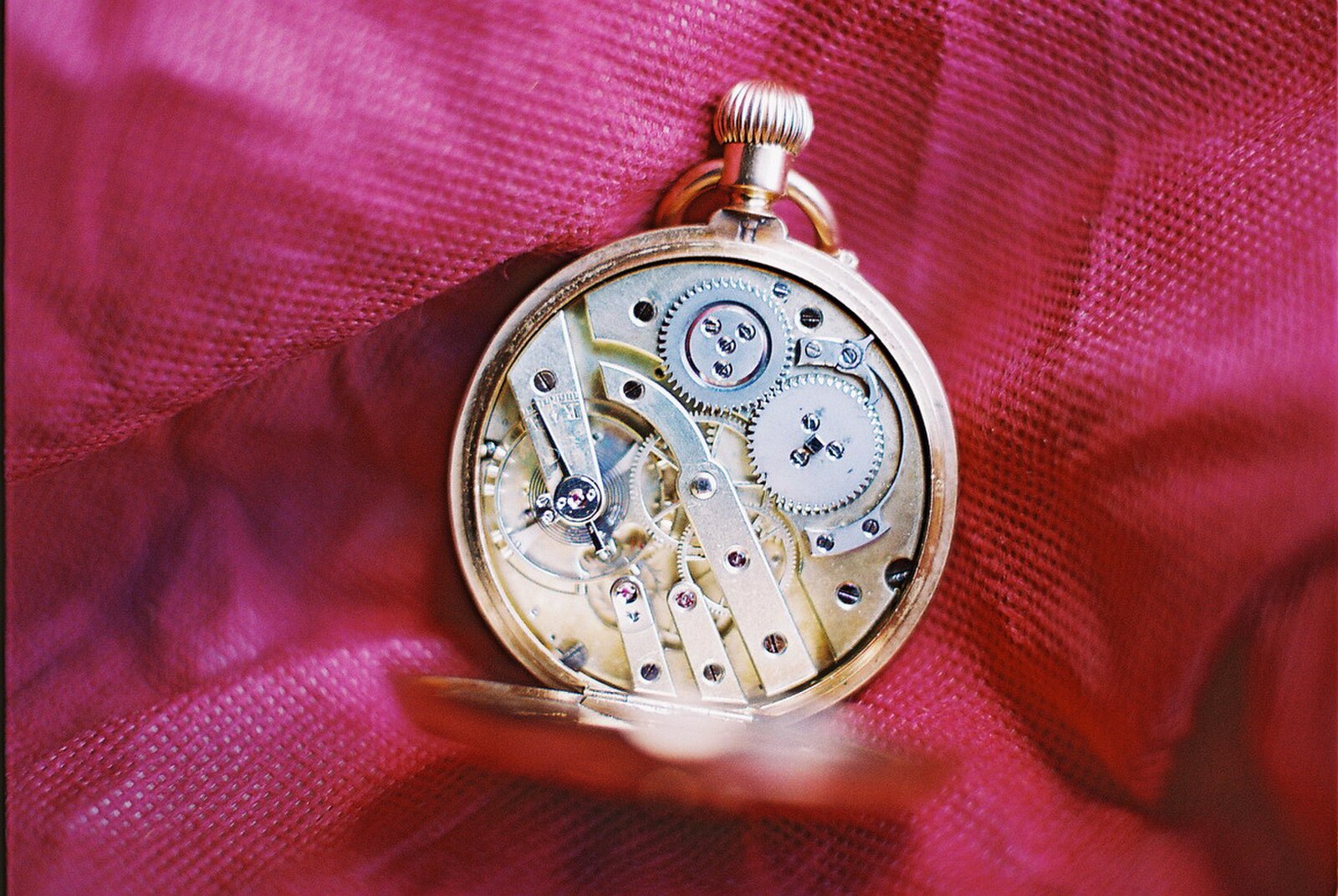
Photo: Boing boom tschak, Public domain via Wikimedia Commons. Illustrative — historic Swiss pocket-watch detail.
Genuine precious-metal cases carry hallmarks indicating gold content — 18K, 14K, or European fineness markings like "750" or "585." Danish originals and Swiss pieces often show additional marks from the case maker and country of manufacture (Swiss assay marks shaped like a squirrel or a grouse head, for example).
American-era Jurgensens in solid gold will show U.S. hallmarks plus the retailer or case-manufacturer initials. Gold-filled cases will be stamped "Jules Jurgensen GF" or similar. Gold-plated Clayman-era cases sometimes carry no metal hallmark at all — just "Stainless Steel Back" or similar. The presence of a proper assay mark is one of the strongest positive signals that you have a watch worth appraising professionally.
Step 6: Identify the movement maker
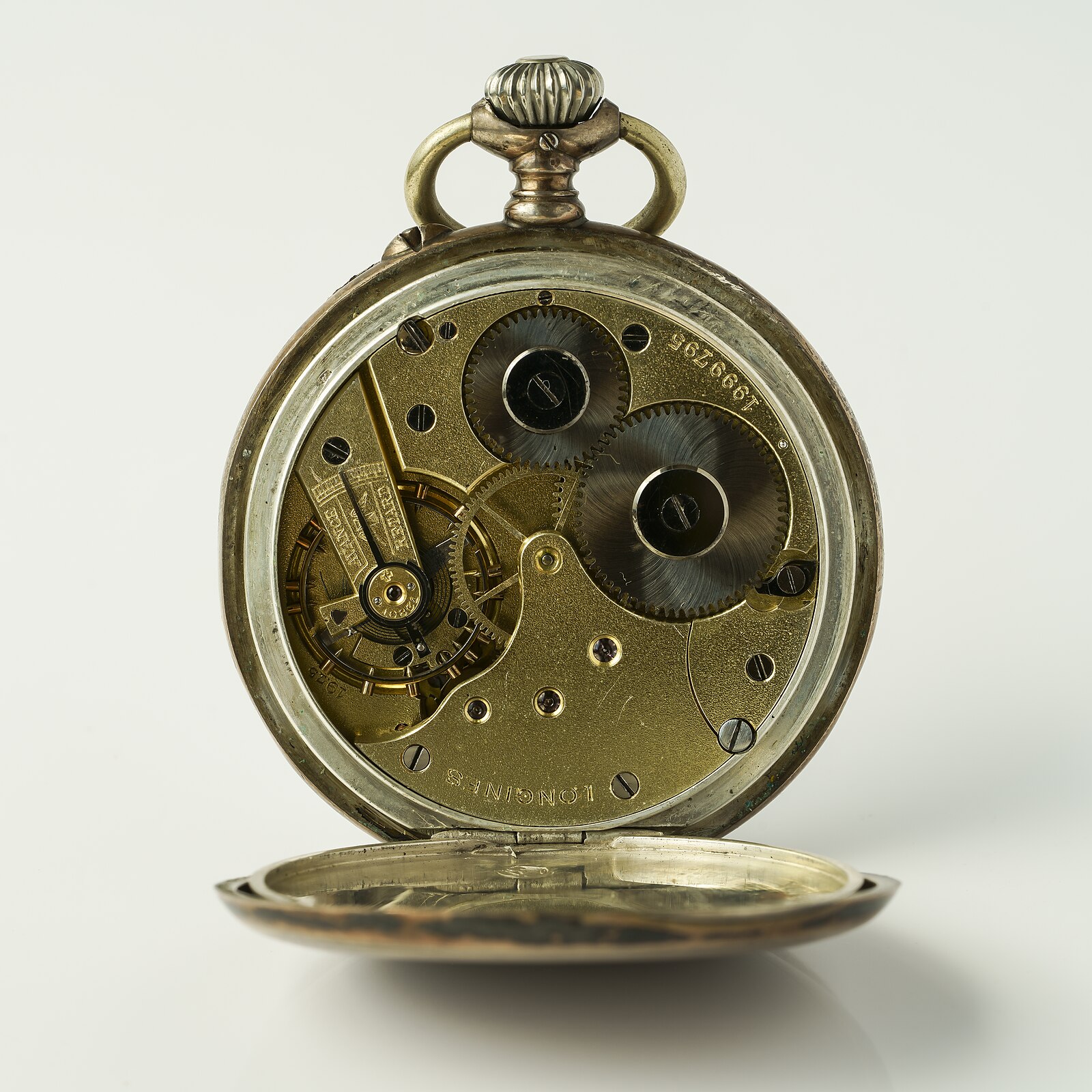
Photo: Franz van Duns, CC BY-SA 4.0 via Wikimedia Commons. Illustrative — Longines pocket-watch movement of a comparable era.
After the Jurgensen name left the family's direct control, the watches were manufactured by other firms and branded with the Jurgensen signature. The movement often tells you more about the watch's real provenance than the dial does. ETA and Felsa movements indicate Swiss-made mid-century production. A LeCoultre-signed movement in an older piece suggests the early 20th-century Swiss partnership era — potentially collectible.
A Japanese movement (Seiko, Citizen, Miyota) inside a Jurgensen case is a definitive marker of the post-1974 Clayman era. None of these movements are inherently bad — some are quite reliable — but they set the ceiling on value. Collectors aren't buying Jurgensen-branded Miyota quartz pieces the way they bid on Urban Jürgensen & Sønner.
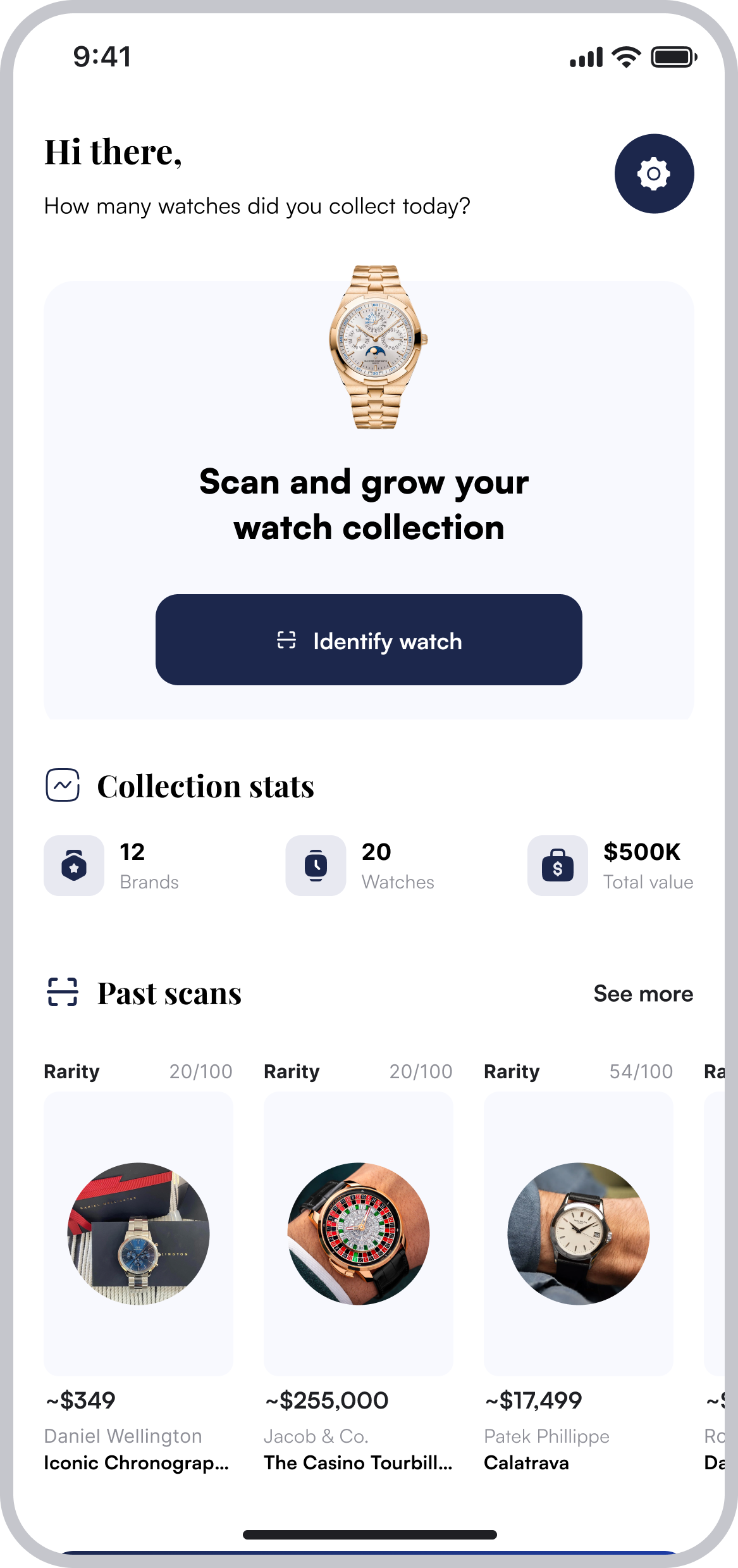
Snap a photo — WatchIQ identifies the era and likely value
Upload one image and WatchIQ tells you which Jurgensen era you're holding, what the movement likely is, and a rough value range — the context you need before you call an appraiser or list it for sale.
Download WatchIQIs it worth anything?
Value varies by more than three orders of magnitude across the three eras. Anything that looks like a pre-1900 Danish or early Swiss piece needs a qualified horologist's eye — the upside is significant.
Antique Danish & early Swiss originals (pre-1920)
$2,000 – $20,000+Hand-finished pocket watches signed Jules Jürgensen or Urban Jürgensen. In 2025, a gold pocket watch owned by Titanic victim Isidor Straus sold at auction for £1.78 million. These pieces belong in a specialist auction, not an eBay listing.
Mid-century American-era (1940s–1960s)
$100 – $800Solid-gold or gold-filled dress wristwatches with Swiss movements. Actual value depends on condition, case metal content, and movement caliber — a 14K solid-gold piece in running condition is worth more than a gold-filled version in similar shape.
Clayman/quartz revival (1974–2000s)
$20 – $100Mass-market pieces assembled in the U.S. Virgin Islands using Japanese movements. Most sell for under $50 on secondary markets. Sentimental value typically exceeds market value.
These ranges are illustrative. Actual value depends on condition, case material, movement, provenance, and current auction trends. For anything that appears pre-1900 or shows Danish/Swiss hallmarks, have a qualified horologist or reputable auction house examine it in person before accepting any offer.