What Watch Is This? Identify Any Watch from a Photo
You've got a photo of a watch — from an estate, a marketplace listing, a wrist shot on Instagram, an inheritance — and no idea what it is. There are over 6,000 active watch brands and most of them never make it onto a "top 50" list. The good news: nearly every watch carries enough visible clues on the dial, caseback, and movement to narrow it down in a few minutes if you know where to look. This guide walks through the same five checks a dealer runs before quoting a price.
Identify with WatchIQWhat you can identify from a photo (and what you can't)
A clear photo can usually pin down four things: the brand (from the dial signature and logo), the model family (from the case shape and dial layout), the approximate era (from typography, lume color, and crystal type), and the movement type (mechanical vs. quartz, often visible through a display caseback). With a sharper photo of the caseback or movement, you can sometimes get all the way to a specific reference number.
What you can't reliably do from a single photo is authenticate a luxury watch or estimate its market value within a tight band. High-end fakes are designed to fool casual photo inspection — authentication needs the watch in hand, weight in grams, movement decoration, and often a loupe. Treat photo identification as a starting point, not a verdict.
Step 1: Read the dial
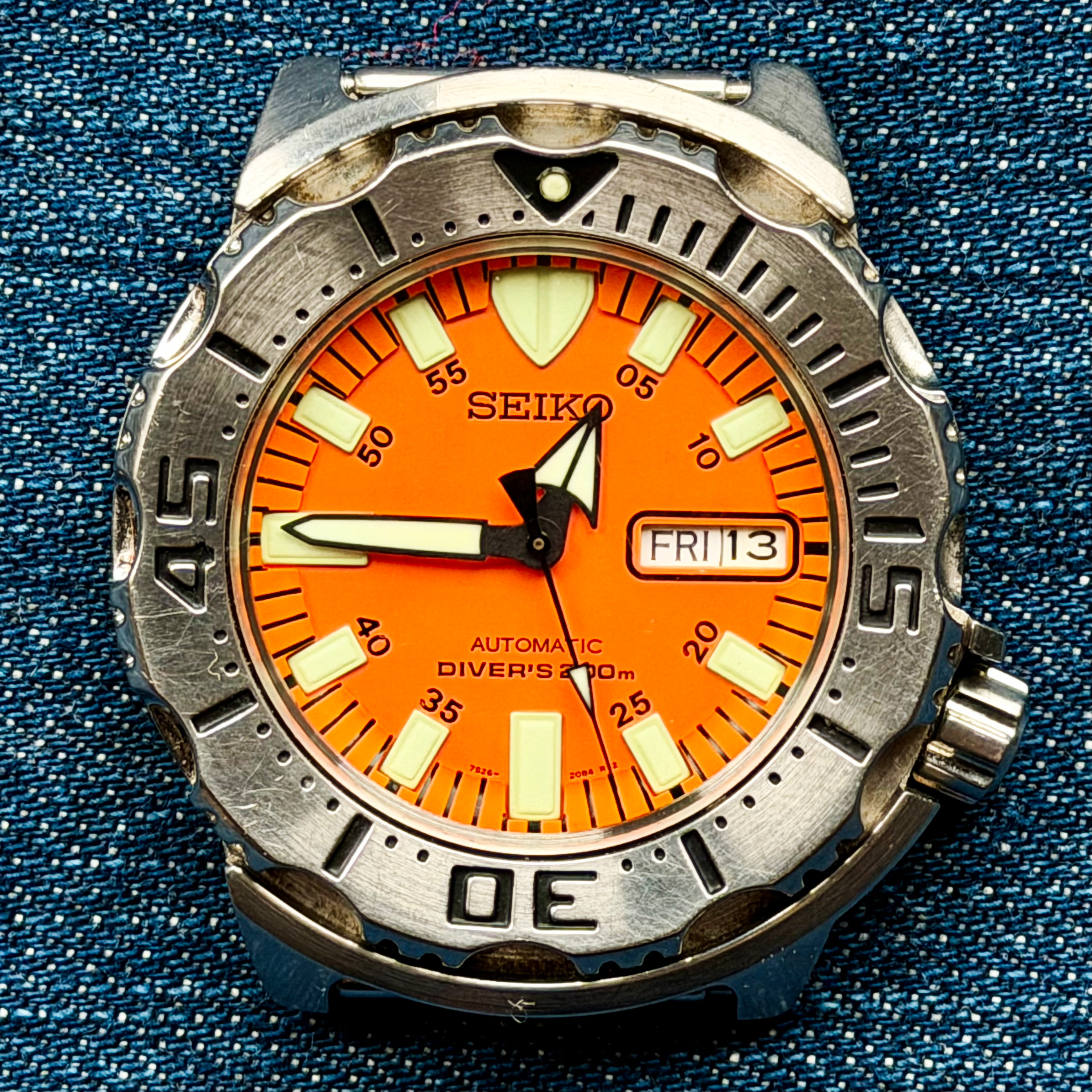
Photo: Olgierd Rudak, CC BY-SA 4.0 via Wikimedia Commons. Seiko SKX781 "Orange Monster" dive watch.
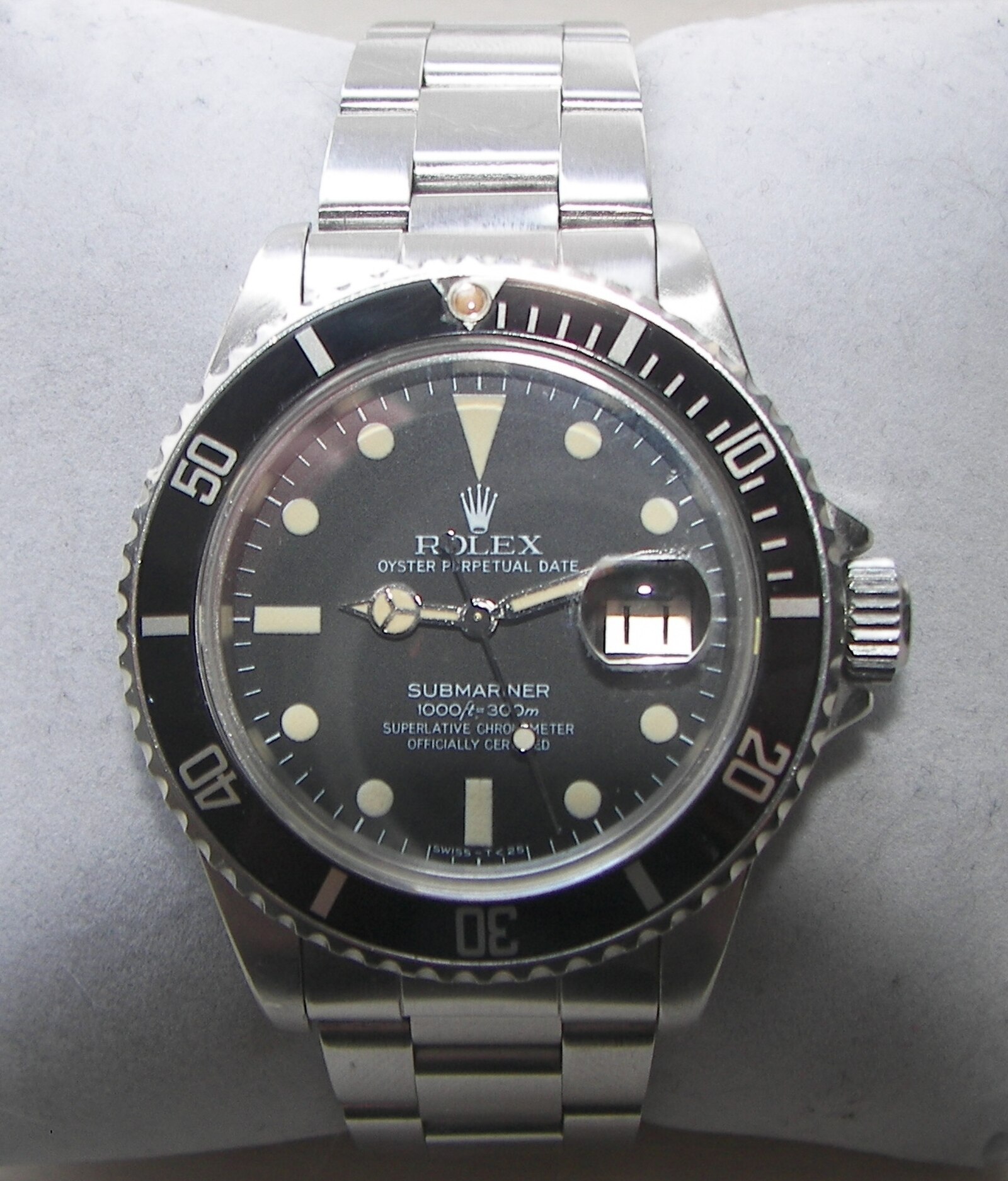
Start with what's printed on the dial. The brand name is usually at 12 o'clock, sometimes with a logo above it. Below the center, you'll often find the model name (e.g., "Submariner," "Speedmaster," "Datejust"), and at 6 o'clock the country of origin ("Swiss Made," "Japan," "Germany") and sometimes a movement descriptor like "Automatic," "Quartz," or "Chronometer."
Type matters. A dial set in clean sans-serif with a centered seconds hand and three sub-dials almost certainly belongs to a chronograph. Roman numerals and a railroad minute track point to a dress watch. Big lume-filled markers and a rotating bezel signal a dive or sports watch. Photograph the dial straight-on, well-lit, and crop tight — even fine print is usually decipherable on a modern phone camera.
Step 2: Check the caseback
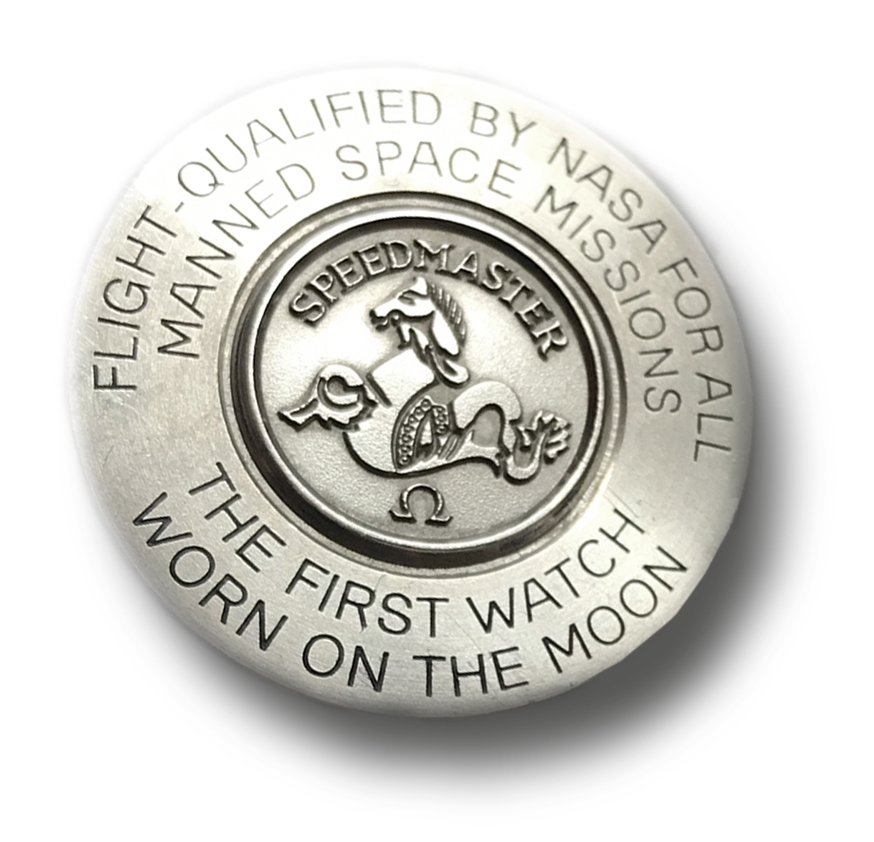
Photo: Auge=mit, CC BY-SA 4.0 via Wikimedia Commons. Caseback of an Omega Speedmaster Professional ("Moonwatch").
Flip the watch over. The caseback is where most identifying information lives: the brand and model again, the reference number (a 4-7 character alphanumeric code that pinpoints the exact variant), the serial number, the case material ("Stainless Steel," "18K," "Gold Plated"), and water-resistance rating. On screw-down casebacks, you'll often see decorative engraving and a small icon — a seahorse for Omega, a coronet for Rolex, an anchor for Breitling Superocean.
If the caseback is plain steel with no markings other than "Stainless Steel Back" and "Water Resistant," you're likely looking at a fashion watch with a generic Asian movement — common with watches sold by clothing brands. The reference number from the caseback is the single most useful thing for narrowing identification, since the brand's own catalog or a database like Chrono24 will turn it into a specific model in seconds.
Step 3: Look at the movement (if you can)
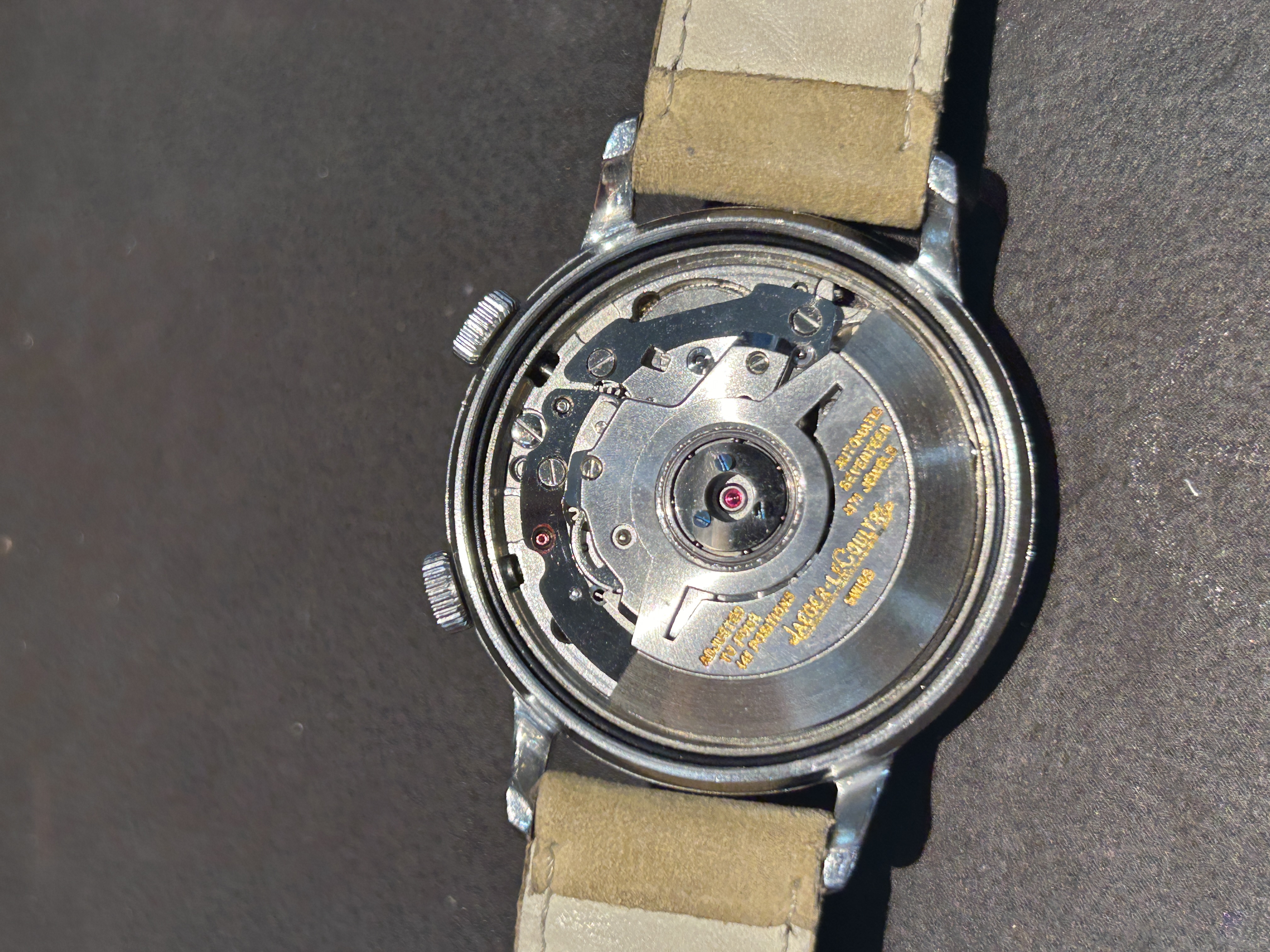
Photo: Ghilt, CC BY-SA 4.0 via Wikimedia Commons. Jaeger-LeCoultre caliber K916 with engraved rotor and bridges.
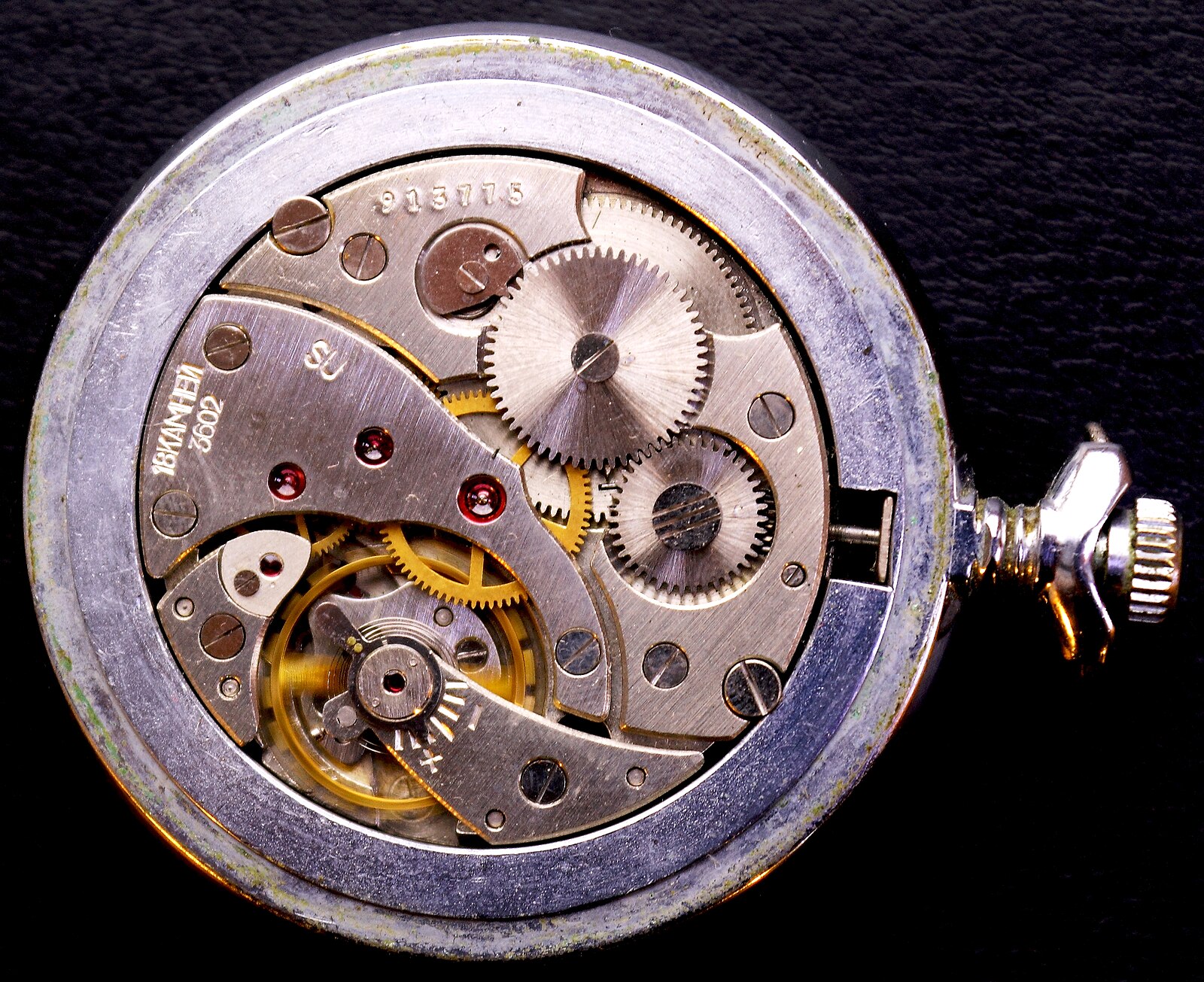
Many modern watches have a glass exhibition caseback that exposes the movement. The movement is signed somewhere — on the rotor, on a bridge, or on the mainplate. Common signatures include "ETA," "Sellita," "Miyota," "Seiko," "Valjoux" (now part of ETA), or an in-house caliber name like "Cal. 3235" (Rolex) or "Cal. 1861" (Omega). The caliber number alone often locks in the model and approximate era.
If the caseback is solid and won't open without a tool, skip this step rather than risk damaging the seals. The dial and caseback alone are usually enough to identify the watch. Mechanical movements have a sweeping seconds hand; quartz movements tick once per second — a useful tell from a video clip even when the caseback is closed.
Step 4: Reverse-image-search the photo
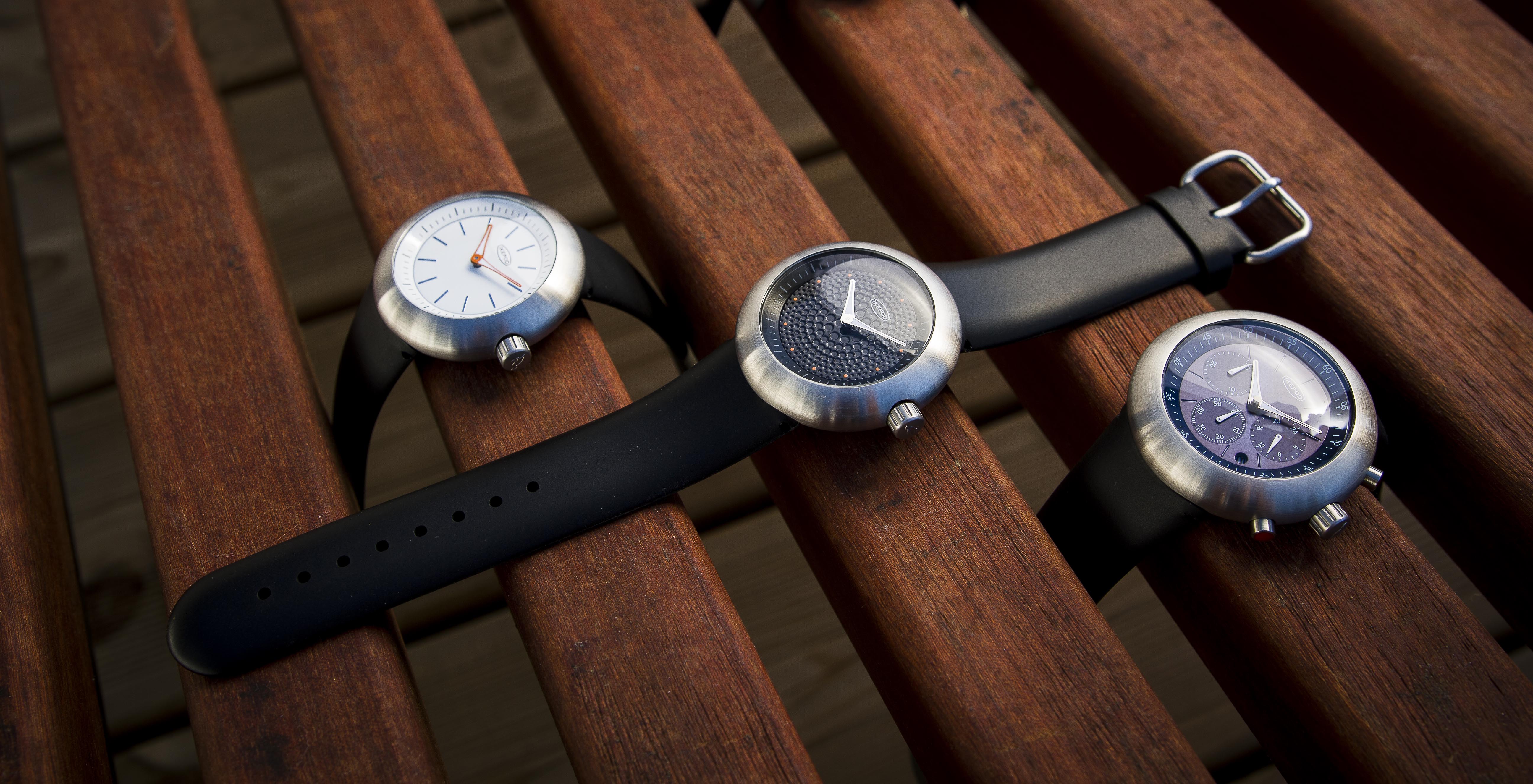
Photo: Lachlan J Stuart, CC BY-SA 4.0 via Wikimedia Commons. Ikepod 2018 collection.
If you've read the dial and caseback and still don't have a match, drop the photo into Google Lens or a similar reverse-image-search tool. For mainstream brands and recent references, this often surfaces a catalog page within seconds. It's less reliable for vintage or unusual references — older photos and watches with unusual angles confuse the model.
Search the brand and any text you read off the dial together (e.g., "Tissot Seastar 1000 chronograph blue dial"). The first three or four image results from a brand-name search will usually include the exact reference, and you can compare details like the date window, sub-dial layout, and bezel print.
Step 5: Use a watch ID app
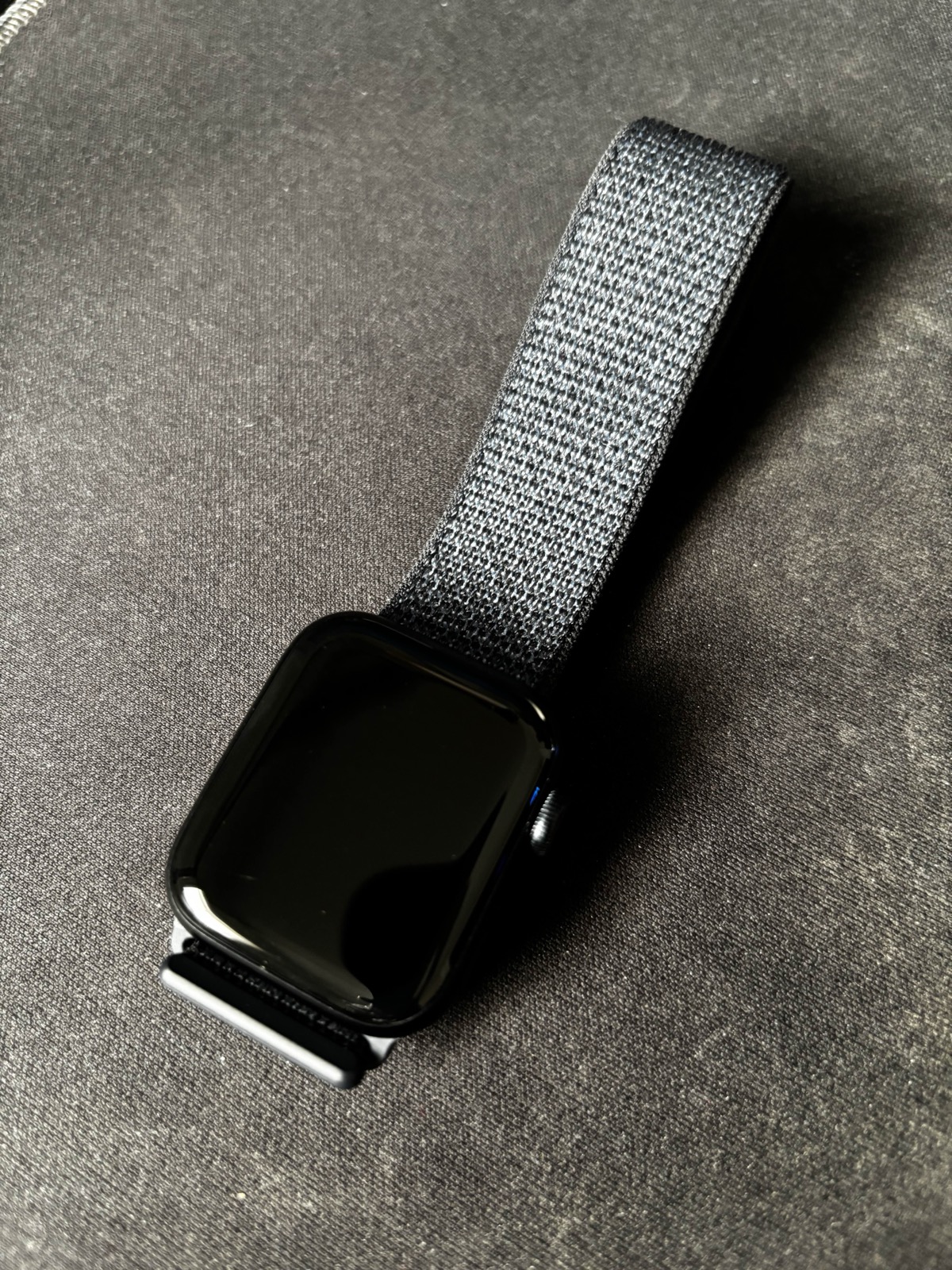
Photo: Jens Kreuter, CC0 via Wikimedia Commons.
When the dial signature is worn off, the caseback is unmarked, or you're screening dozens of estate-sale photos, a watch identification app is faster than manual lookup. WatchIQ uses a vision model to read the dial, caseback, and case shape together and returns brand, model, movement type, case material, and approximate year — usually in under ten seconds.
Keep your expectations calibrated to what a photo can give you. The app will return high confidence on mainstream brands with clear dial signatures, lower confidence on dressy three-handers from minor brands, and explicit "uncertain" output on unsigned or heavily worn pieces. Treat its answer as a strong hypothesis to verify against the caseback markings, not a substitute for them.
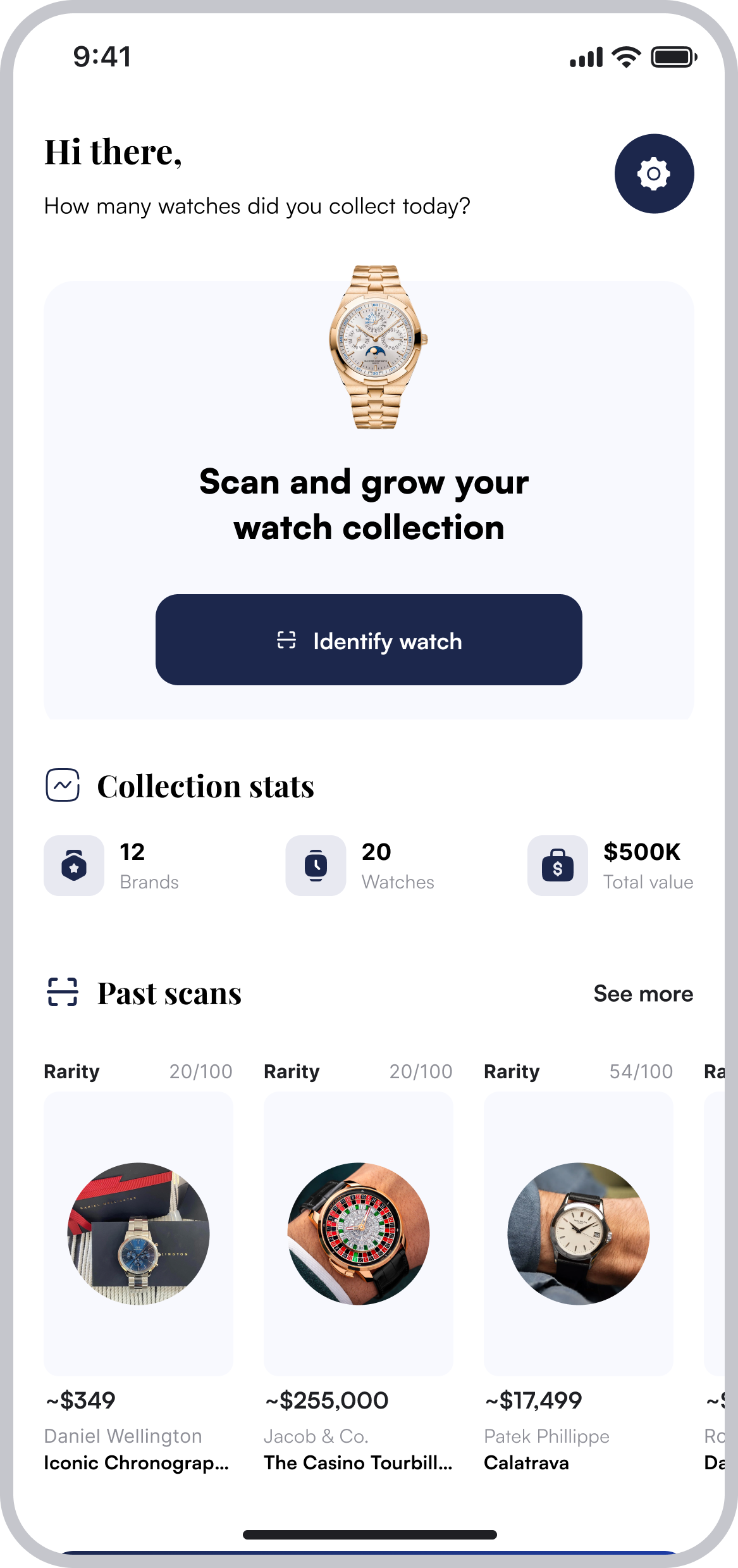
Snap a photo — WatchIQ tells you what watch it is
Upload one image and WatchIQ returns the brand, model, movement type, case material, and approximate year. Free to try, no signup, no listing scraping — just instant photo identification.
Download WatchIQ